Learn why a dining table should be described by component rather than a single material label.
Break the table into parts
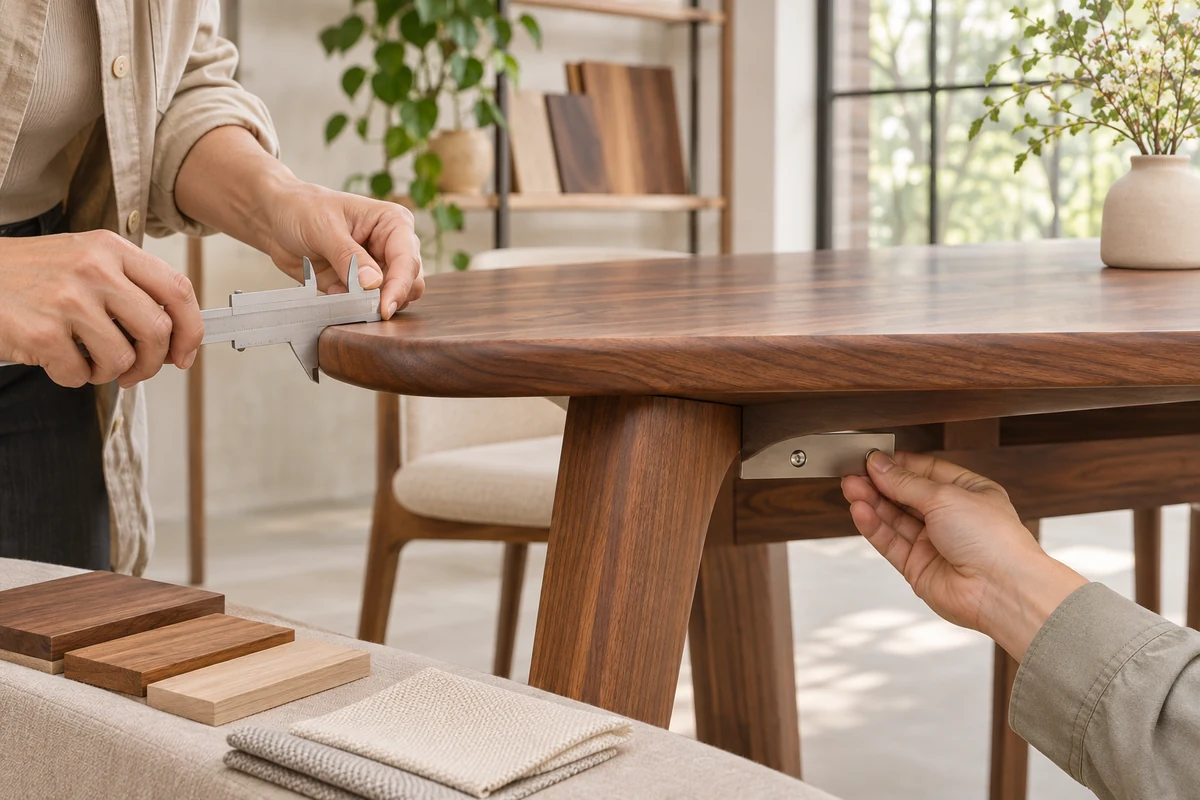
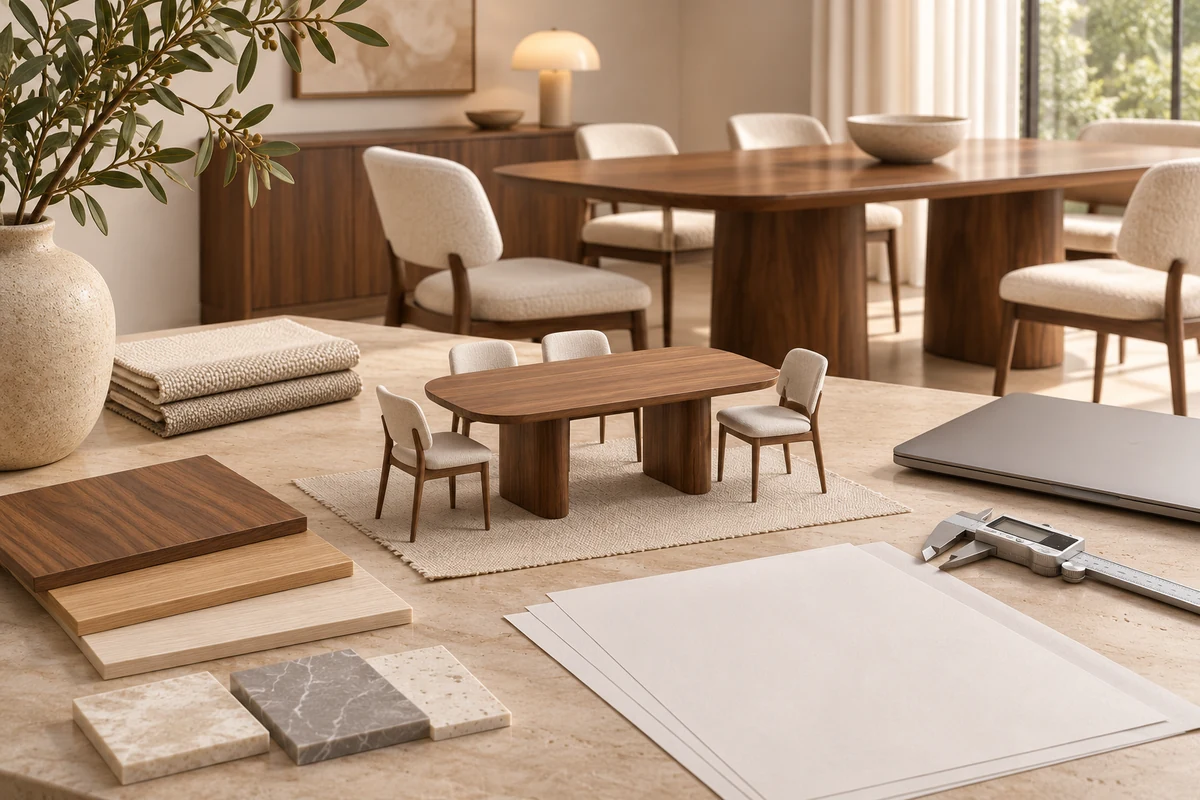
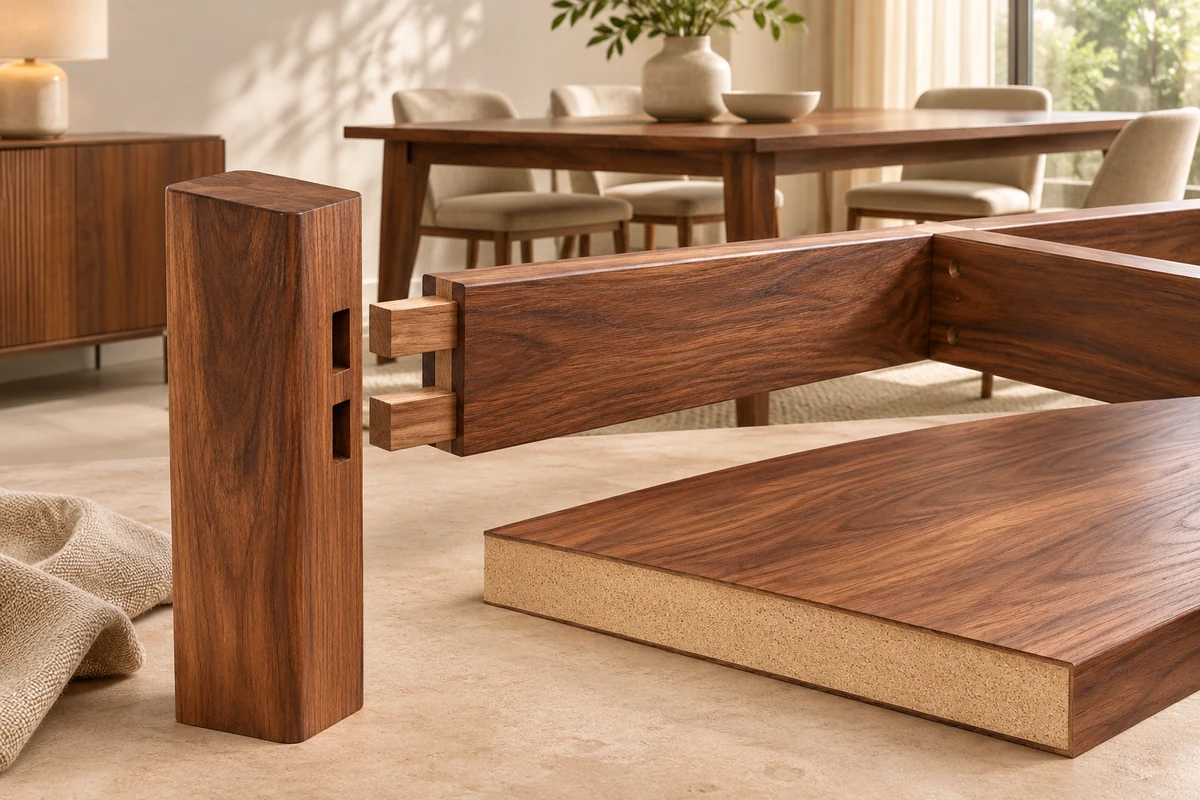
A dining table can combine different materials in its frame, legs, top and decorative surfaces. Describing the entire item as wood does not identify those differences. Ask for a component-level specification so that purchasing teams, listing writers and customers are working from the same information.
Clarify the surface construction
For an MDF-based top, ask about the panel specification, facing material, edge treatment and finish. A veneer surface, a printed finish and other decorative treatments are not interchangeable descriptions. Request a cross-section or technical explanation when the construction is unclear; appearance alone cannot establish the substrate.
Understand natural variation
Solid wood components may show differences in grain and color. Agree the acceptable visual range and the finish reference for the project. Ask for the supplier care instructions and any environmental limitations associated with the chosen construction. Avoid assuming that all wood components respond in the same way.
Use accurate product language
State the confirmed material of each main component in the order specification and retail description. Pengbo discusses solid wood bodies and different tabletop options across its dining table business, including MDF and sintered stone. The exact combination, finish and available options must be confirmed for each model.
Explore dining tables · Discuss your requirements · More in Materials & Care