An extendable table lets one dining area serve daily meals and occasional gatherings. Learn what makes the transition practical.
Plan two layouts, not one
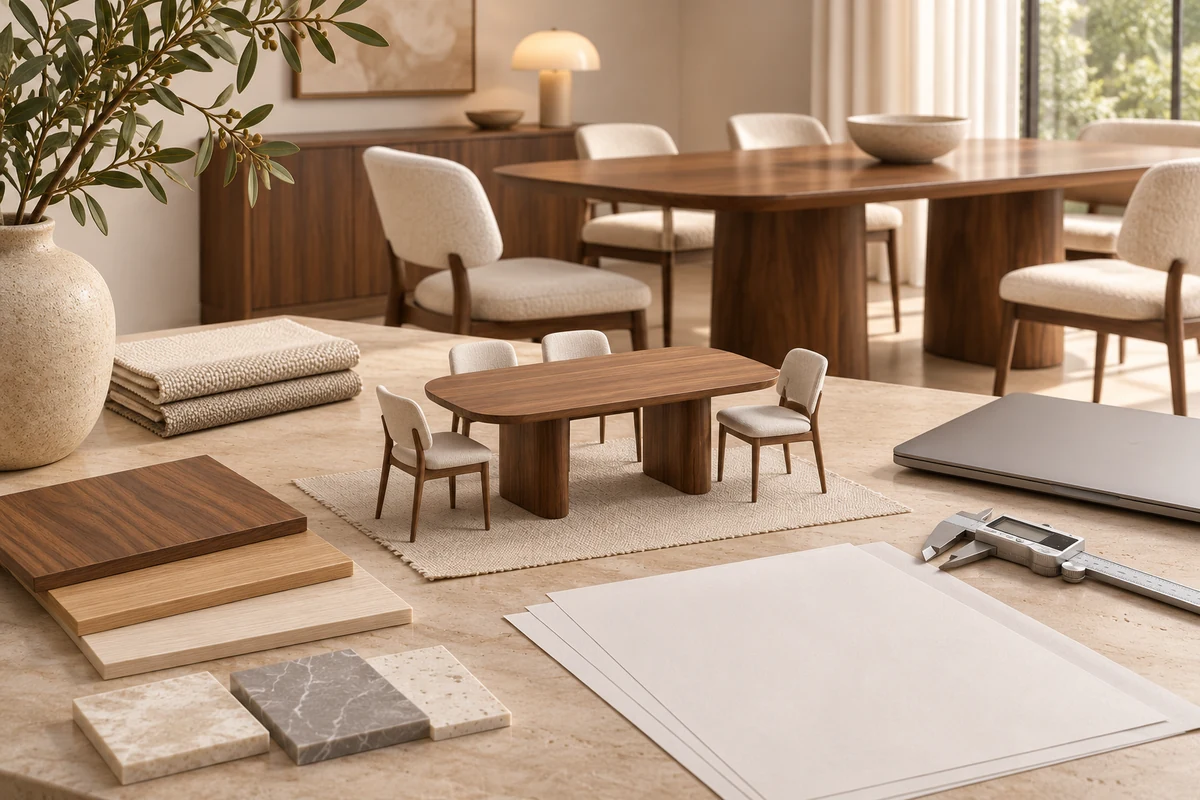
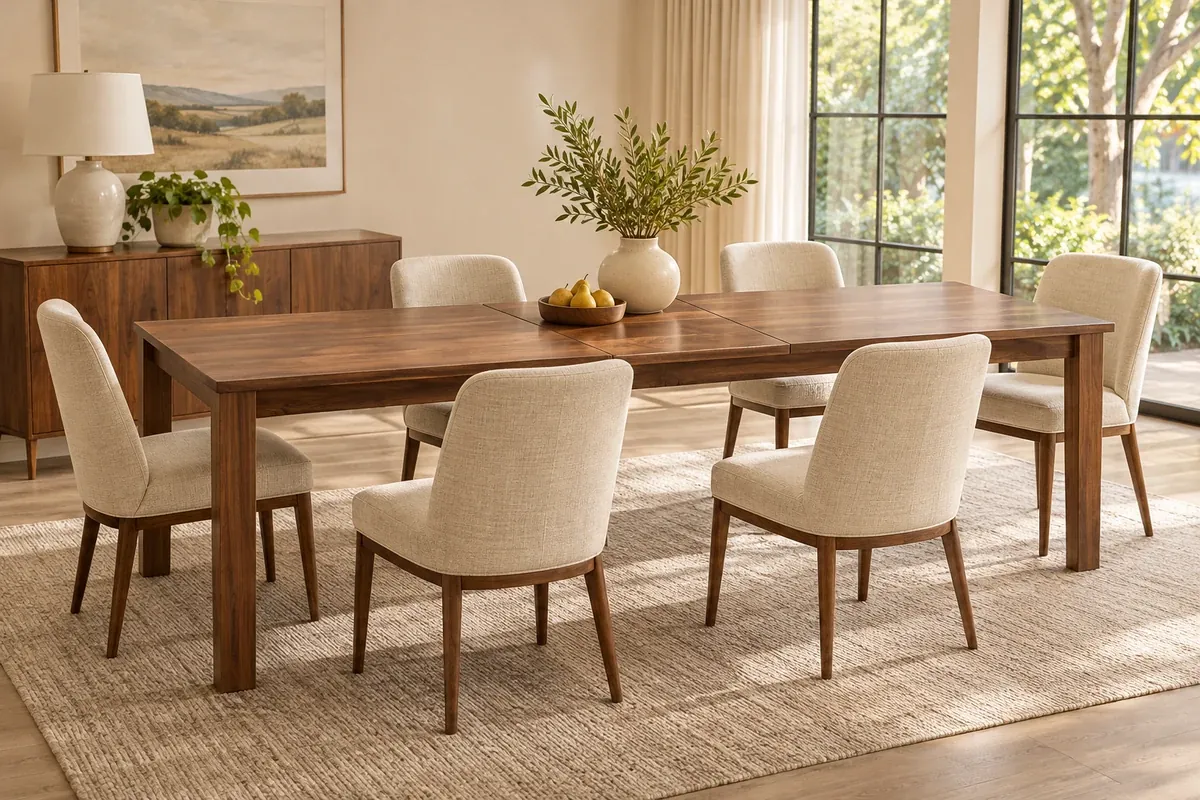
Start with the table closed, then draw it at its full length. Chairs, door swings and the route to the kitchen should work in both arrangements. A table that fits comfortably every day can still become awkward once an extension and extra chairs are added. Ask for closed and open dimensions before comparing models.
Look closely at the extension
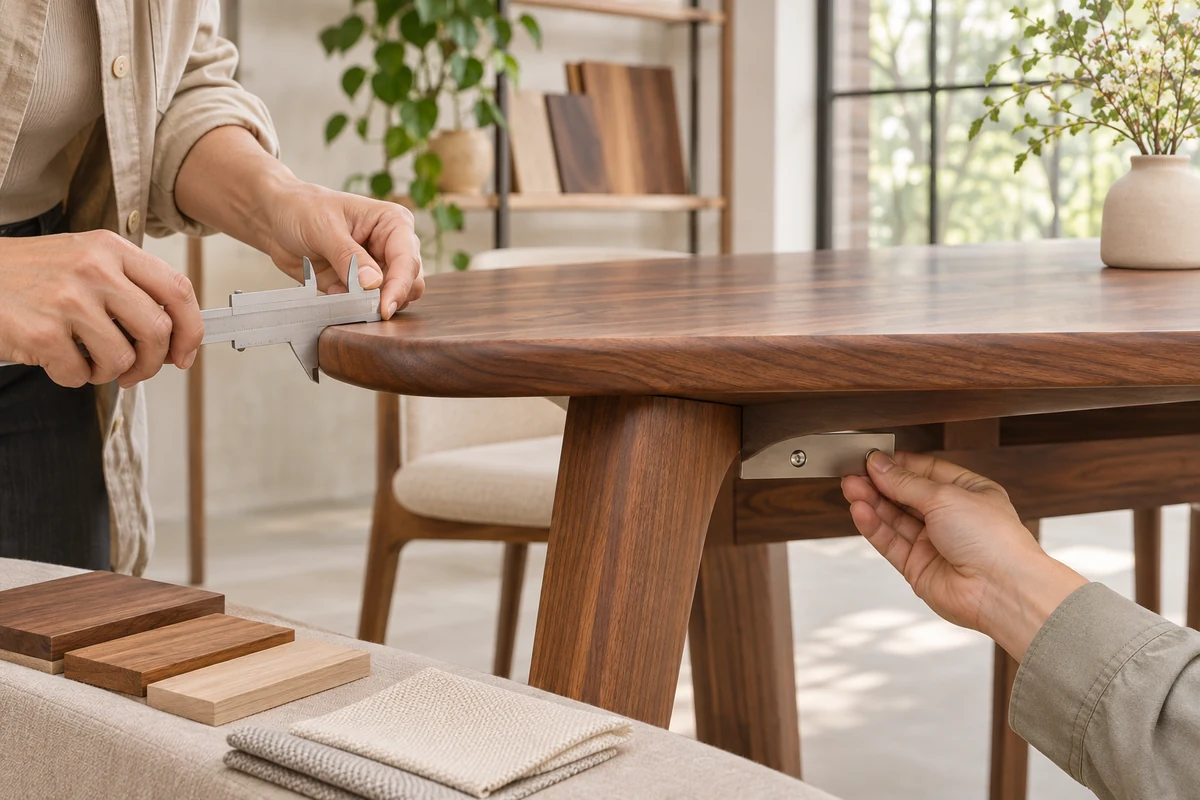
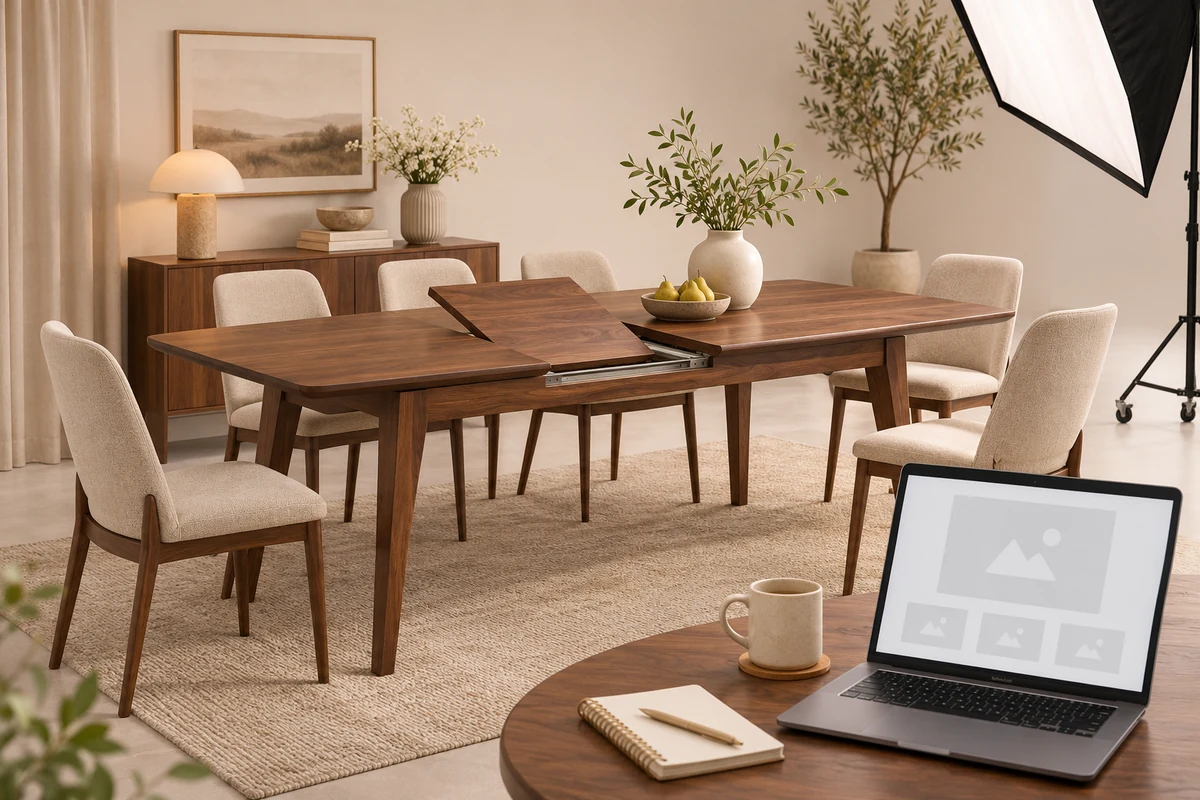
Ask how the leaf is stored and whether one person can operate the mechanism as intended. During sample evaluation, open and close the table several times, inspect the alignment of the top and check the locking method. Photographs of an extended table alone do not show the effort involved or the condition of the underside.
Match the base to the seating plan
Leg position affects where the extra guests can sit. Check the space between legs, the clearance beneath the apron and the relationship between the leaf and the base. Seat the intended chairs around a sample where possible, including end positions. Avoid estimating a seating capacity from tabletop length alone.
Build a useful retail story
Show both configurations in product photography and explain the operating steps in plain language. An extension should solve a real customer problem: a smaller daily footprint with a larger dining surface when needed. Ningjin Pengbo Woodwork supplies standard dining table designs and accepts drawings or samples for custom discussions; the mechanism and dimensions should be confirmed for the selected model.
Explore dining tables · Discuss your requirements · More in Dining Table Design