Explore how folding surfaces can make a dining area easier to adapt, and what buyers should check before selecting a design.
Define the change of use
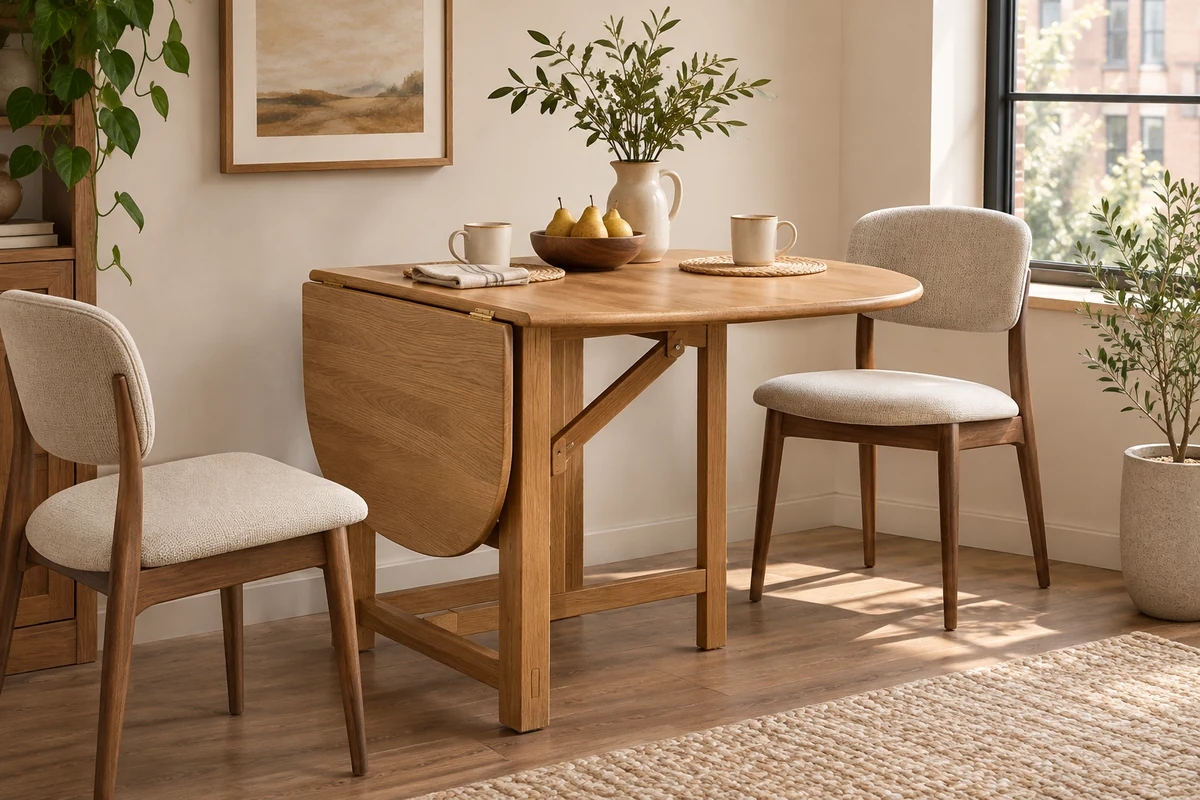
A folding table may free a circulation route, create a temporary work surface or allow a small room to change between meals and other activities. Describe that use first. A fold-down leaf and a table designed to fold for storage solve different problems, so use precise descriptions when preparing a sourcing brief.
Measure the folded footprint
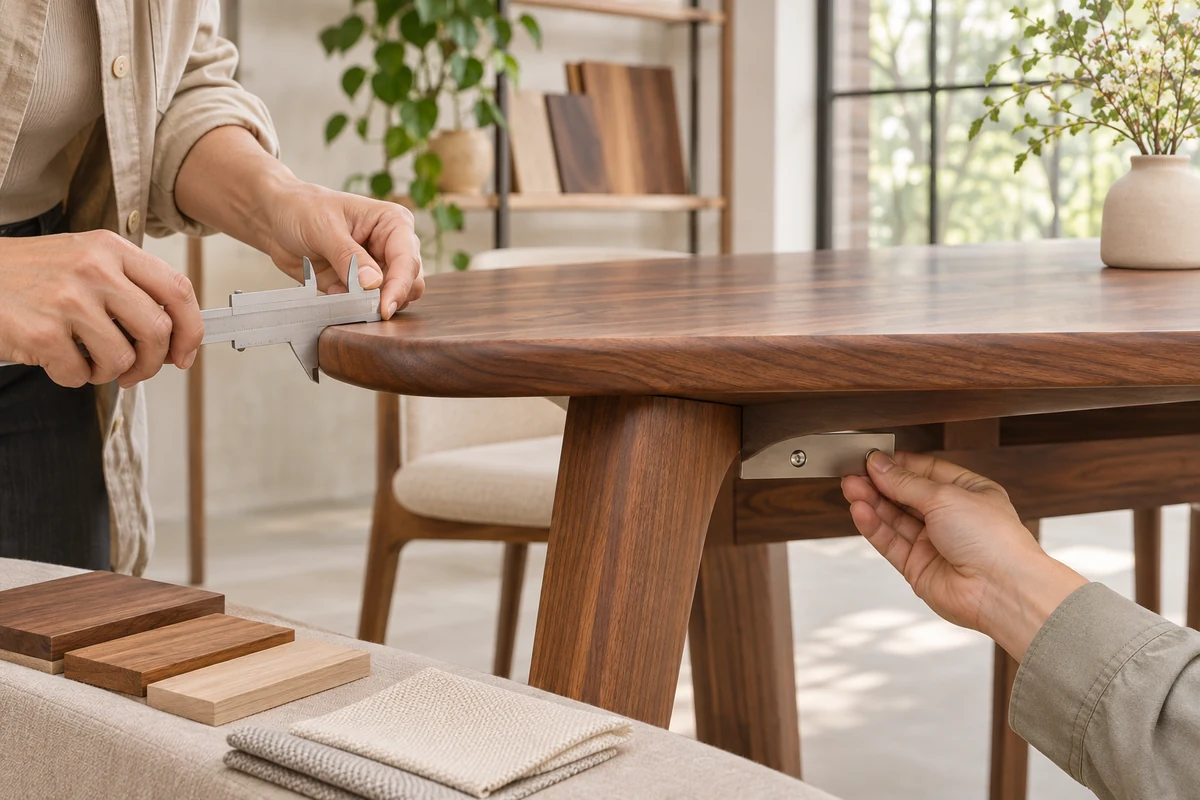
Check width, depth and height in every intended configuration. A folded leaf can still interfere with knees or chair storage, while a stored table needs a suitable resting position. Include protruding hinges, supports and handles in the assessment rather than relying only on the top dimensions.
Evaluate supports and instructions
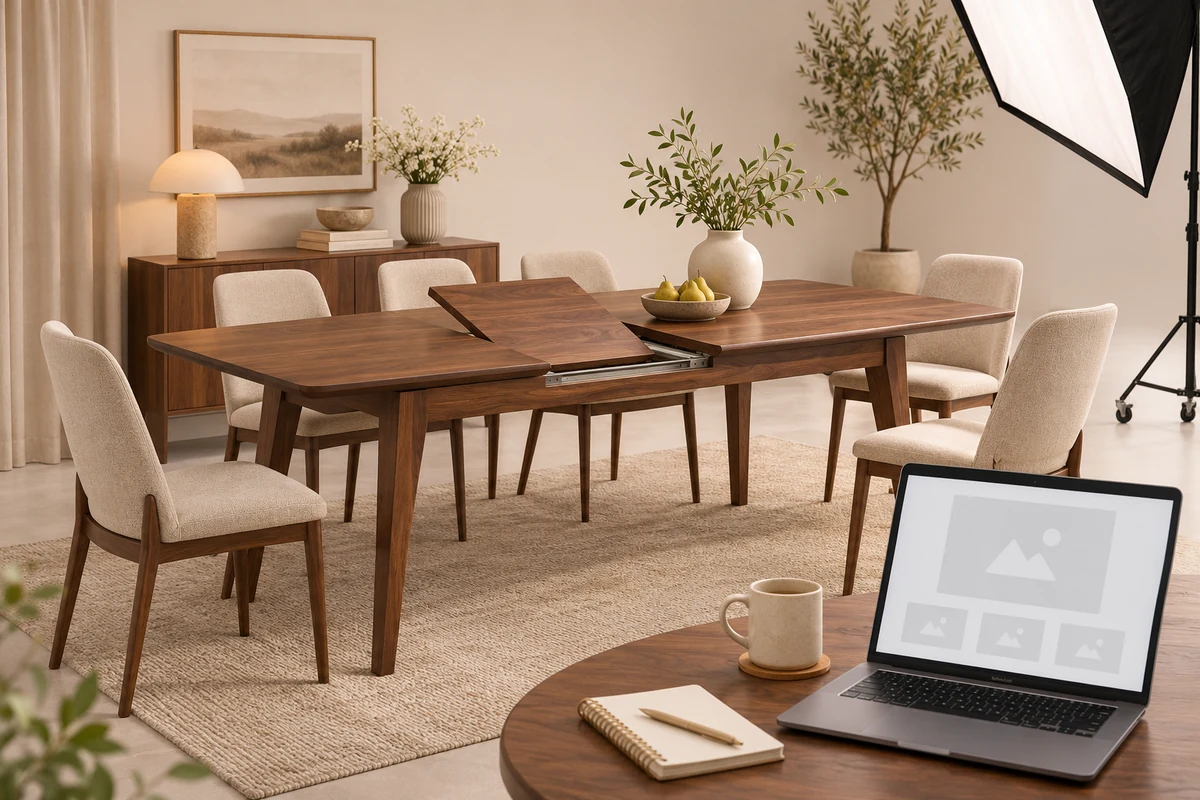
Open and close a sample according to its instructions. Check that supports engage as designed and that users can see how to position them correctly. Ask the supplier to explain any restrictions on moving the table, loading an unsupported leaf or operating the mechanism. Required testing depends on the product and intended market.
Make product listings unambiguous
Use separate photographs for folded and open positions, with clear configuration names. Specify what arrives assembled and which steps the customer completes. For a custom inquiry, send Pengbo your room constraints, preferred top material and an example of the folding function; availability and construction details need model-specific confirmation.
Explore dining tables · Discuss your requirements · More in Dining Table Design