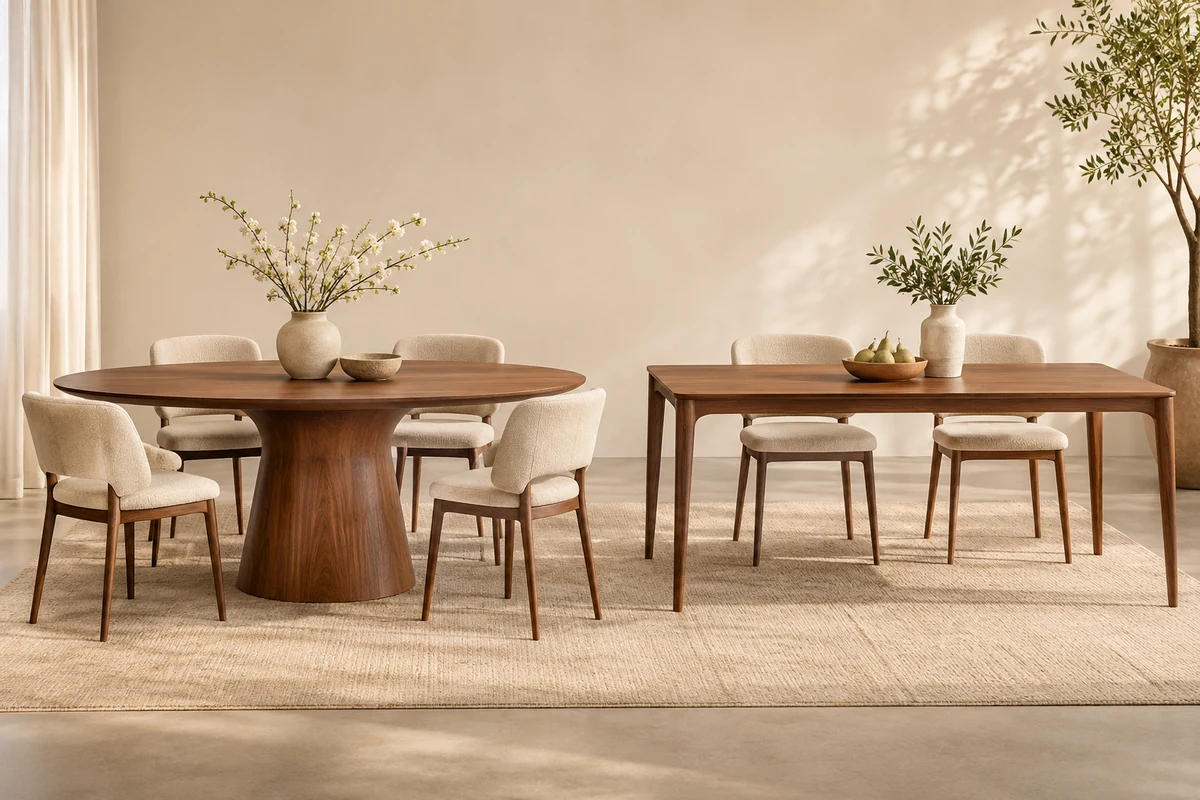
Compare two common dining table base layouts through chair access, room appearance and assembly requirements.
Start with the chairs
A central pedestal can give a dining table a visually open edge, but its foot or column may still affect where feet rest. Four-leg designs place supports nearer the corners, where wide chairs or armrests can meet them. Compare the actual chair and base combination instead of treating either layout as automatically more comfortable.
Read the room visually
An oval top with a sculptural base can become a focal point in a calm interior. A rectangular table with tapered legs may sit naturally beside straight cabinetry or bench seating. Consider what buyers will see from the doorway as well as from above; the base often defines the table silhouette.
Inspect the complete structure
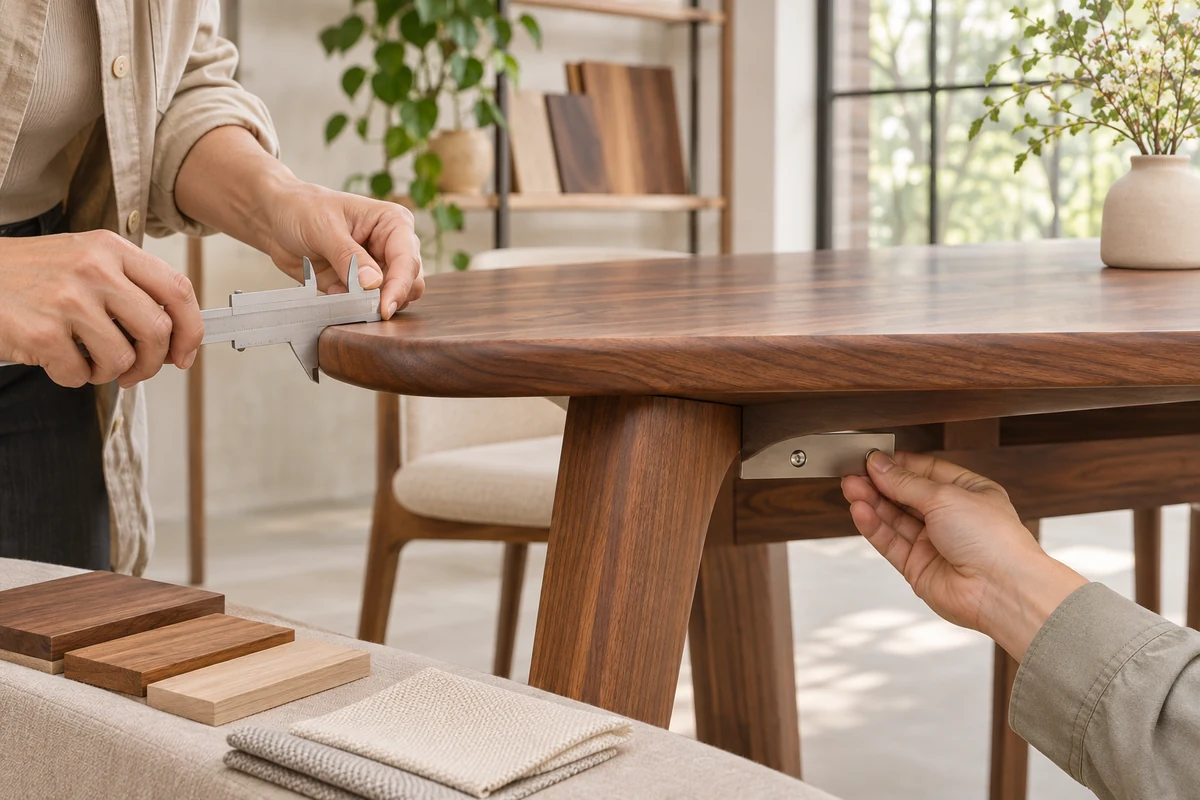
Ask how the base connects to the top and what assembly checks are required. On the sample, inspect fittings and stability according to the supplier instructions and intended use. A photograph cannot establish load capacity or compliance. Request relevant specifications and test information rather than inferring performance from a heavy-looking base.
Choose an assortment with a purpose
Retailers can offer both styles when each fills a distinct need. Keep notes on chair compatibility, packing structure and assembly steps alongside color and finish. Browse Pengbo dining table collections for visual direction, then confirm the exact construction and available options for the model under discussion.
Explore dining tables · Discuss your requirements · More in Dining Table Design